This post contains affiliate links, which means I’ll receive a commission if you purchase through my link, at no extra cost to you. Please read my disclosure here.
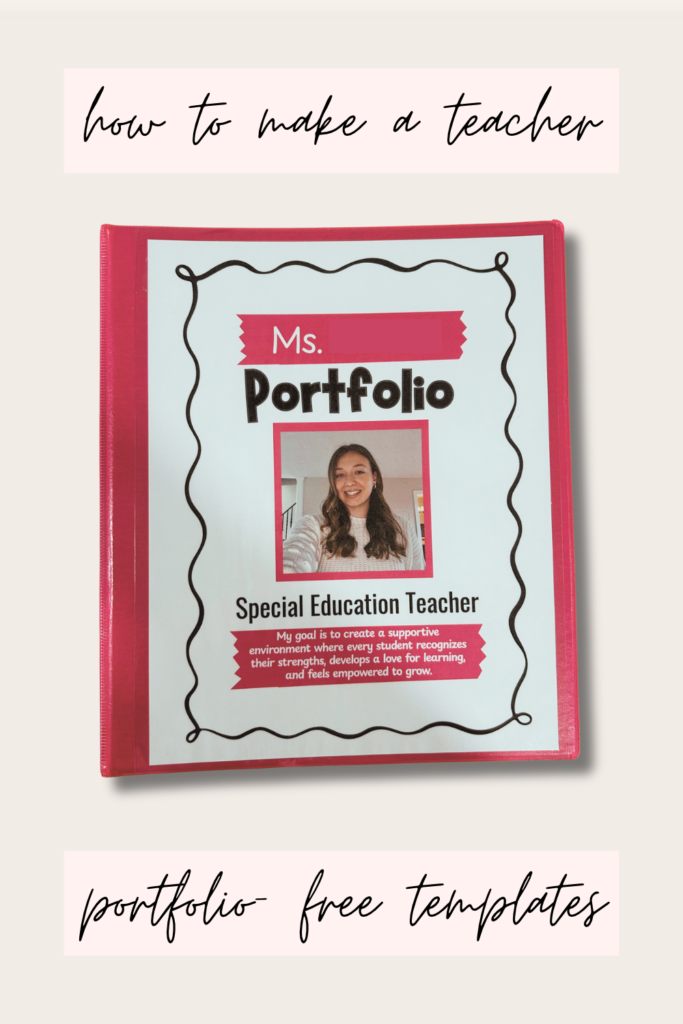
This past summer, I was applying to teach at different schools, and I knew I wanted to create a teacher portfolio that I could bring with me to interviews. Interviews are extremely nerve-racking for me, but one thing that always helps when I’m nervous is being as prepared as possible. I knew having a portfolio filled with examples of what I’ve done throughout my teaching career and that truly reflected the kind of teacher I am would help me feel so much more confident and prepared.
I scoured the internet for teacher portfolio ideas and inspiration before deciding which sections I wanted to include. Ultimately, I decided the most important sections were:
- Letter of Intent & Resume
- Classroom Environment
- Letters of Recommendation
- Instructional Materials
- Evaluations
Below is a detailed look at what I included in each section of my portfolio and free editable resources so you can put together your own portfolio!
And the best part? You don’t need anything fancy or expensive to put it together! All I used was a 1-inch binder, page protectors, and dividers from Dollar Tree. That’s it! Simple, inexpensive, and still professional enough to bring to your interviews.
1. Letter of Intent & Resume:
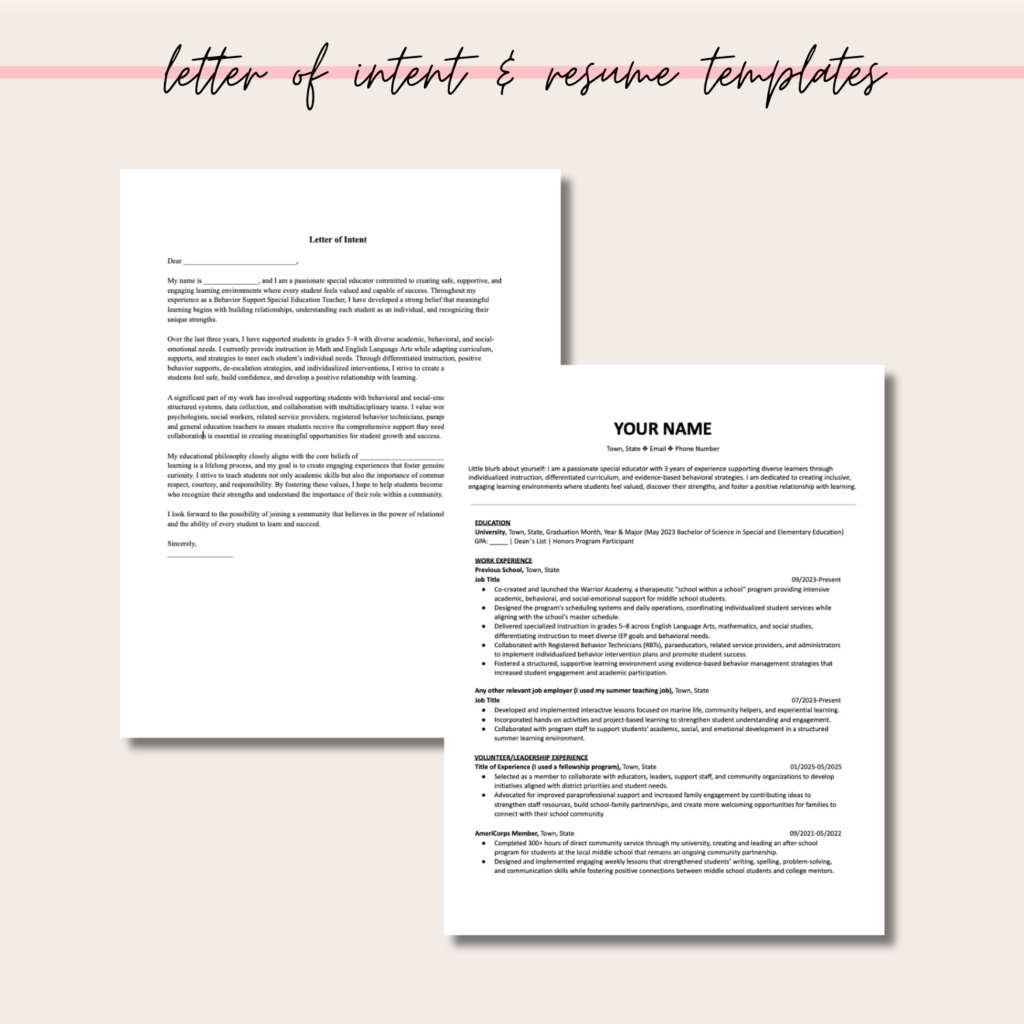
I started my portfolio with my letter of intent and resume. My letter of intent highlighted my relationship-driven, student-centered approach to teaching, emphasizing the importance of creating safe and supportive learning environments where students feel valued, build confidence, and recognize their strengths. I also included my experience with differentiated instruction, behavioral support, individualized interventions, and collaboration with multidisciplinary teams.
One thing I definitely recommend is using the last paragraph of your letter to explain how your teaching philosophy aligns with the school’s core beliefs. This shows that you’ve taken the time to research the school and are intentional about why you’re interested in working there. Below I linked free Google Docs templates for both pages so you can easily customize them for your own portfolio!
For the rest of the editable templates (please make a copy before editing)
2. Classroom Environment:
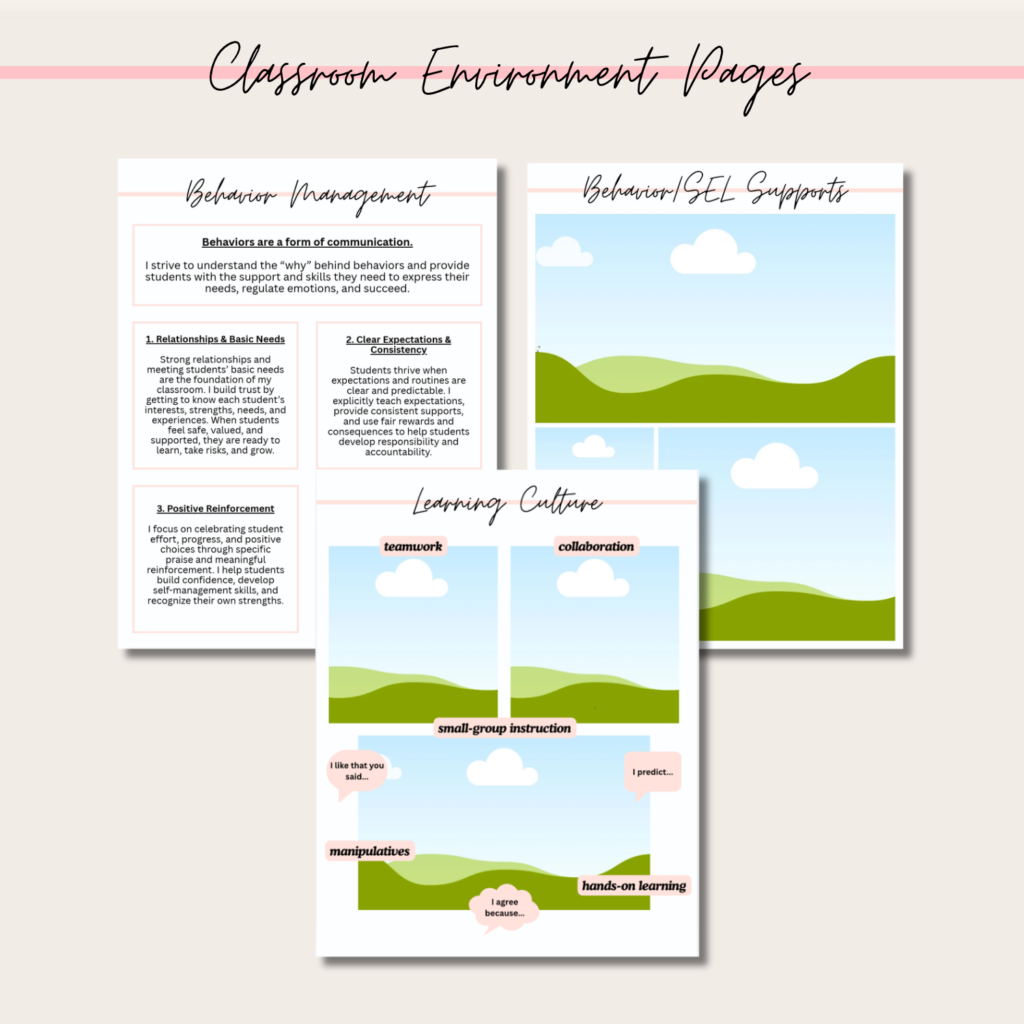
I broke this section down into three separate pages to showcase the type of learning environment I strive to create, the supports I’ve used with students, and my behavior management philosophy.
My first page was titled “Learning Culture.” I filled the page with words and phrases that represented what I believe an exceptional classroom learning culture looks like.
I also included three pictures from my previous classrooms, making sure to cover students’ faces with stickers to protect their privacy. Around the pictures, I included words and phrases such as: Teamwork, Collaboration, Differentiated instruction, Manipulatives, Small-group instruction and Hands-on learning. I also added little speech bubbles with phrases students might use during classroom discussions, such as “I like that you said…”, “I predict…”, “I agree because…”, and “I disagree because…”
I wanted this page to give a visual representation of the type of classroom I hope to create: one where students feel comfortable participating, sharing ideas, learning from one another, and taking an active role in their learning.
My second page was titled “Behavior/SEL Supports.” Since my previous position was as a Special Education Behavior Teacher, I had a lot of resources and materials to pull from for this section. I included pictures of Zones of Regulation check-in posters I created, daily behavior accountability sheets I used with students, break cards, and a picture of some of my students holding their star jar, which we used as a form of positive reinforcement.
I recommend choosing materials that showcase your creativity and your ability to develop resources that are meaningful, practical, and effective for your students. This is a great opportunity to highlight supports you’ve created or used throughout your teaching career!
My third page for this section was titled “Behavior Management.” I highlighted the four main components of my behavior management philosophy and explained what each one meant to me. I definitely recommend taking some time to think about your own behavior management style and what it looks like in practice. This is a great opportunity to showcase what you believe, how you approach challenging behaviors, and the type of classroom environment you want to create.
Click here for these editable templates (please make a copy before editing)
3. Letters of Recommendation:
Next, I included three letters of recommendation from my previous principal, school licensed mental health counselor, and co-teacher.
I always recommend having a variety of recommendation letters from people who have worked with you in different roles and capacities throughout your school. This helps showcase different perspectives on your work, relationships with students, collaboration, and professionalism.
4. Instructional Materials:
This section was honestly one of my favorite parts of putting my portfolio together because I was able to pull together worksheets and materials that I modified from our curriculum to better meet my students’ needs.
This is such a great resource to have in your portfolio because questions about accommodations and modifications are bound to come up during an interview, especially if you’re applying for a Special Education position.
Having actual examples of materials you’ve modified makes it easy to show, rather than just explain, how you support students with different learning needs.
5. Evaluations:
The last section of my portfolio included three evaluations completed by my previous principal throughout my three years at my former school. I think these are great to include because they can highlight your work ethic, instructional strengths, classroom management, and lessons you’ve planned that have gone well and supported your students.
It’s one thing to talk about your strengths during an interview, but having feedback from an administrator to back them up makes your portfolio even stronger! 🙂
Putting this portfolio together made me feel so much more prepared going into interviews. I loved having actual examples of my work that I could reference, pull out, and share when answering questions.
One of my biggest questions when putting together my teacher portfolio was how many copies to bring and what to actually do with it during the interview. Everyone online seemed to have a different opinion! I ended up bringing one portfolio with me and keeping it next to me throughout the interview. If I needed it, it was there, and if I didn’t, no big deal. Honestly, just having it with me made me feel more prepared!
At the end of the interview for the job I ended up accepting, the committee commented on how nice my portfolio was, even though I hadn’t actually used it during the interview. As I was getting ready to leave, I asked the principal if I could leave a copy with her. I mentioned that I had other copies which was true (I didn’t want her to worry about returning it if I didn’t get the job.) I loved leaving it behind because I knew I was leaving them with something tangible that they could look through and refer back to while making their decision, even after I had left the room.
If you’re preparing for teaching interviews, I highly recommend creating one of your own! It doesn’t need to be fancy — just something that reflects who you are as a teacher, what you believe, and the work you’re proud of.
Click below for all of the editable templates to help make your own portfolio!
For the rest of the editable templates (please make a copy before editing)


